In brief
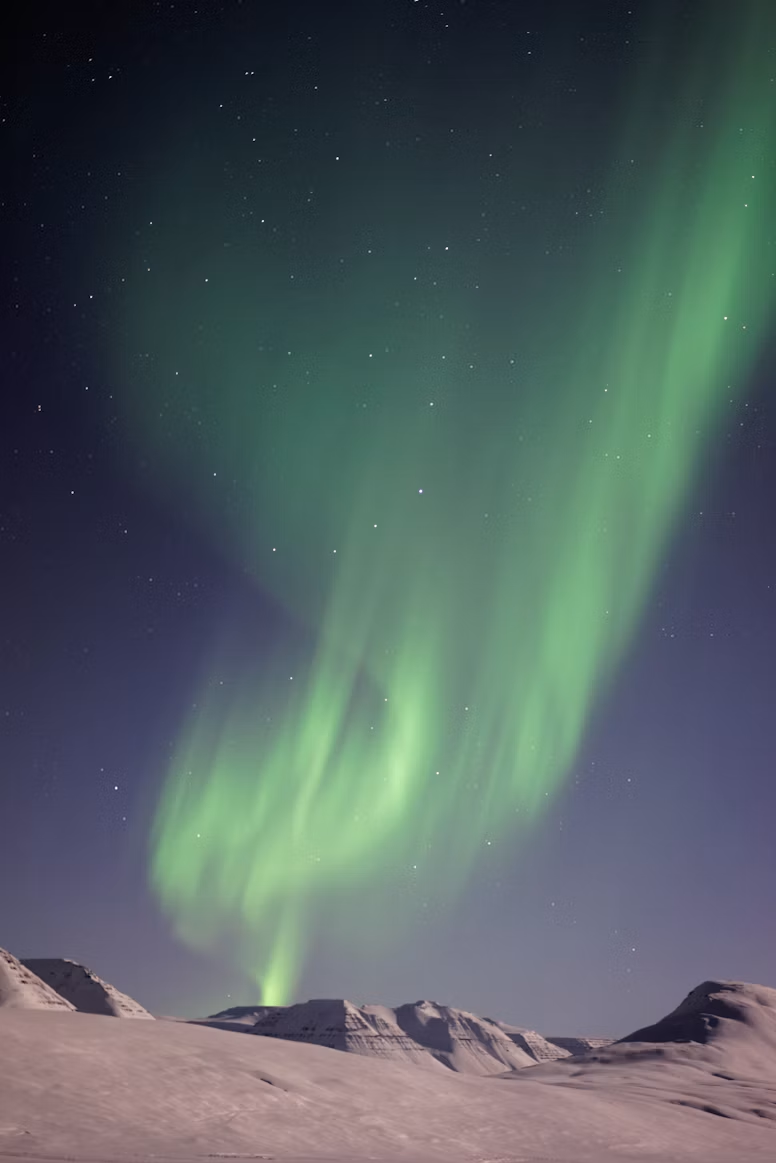
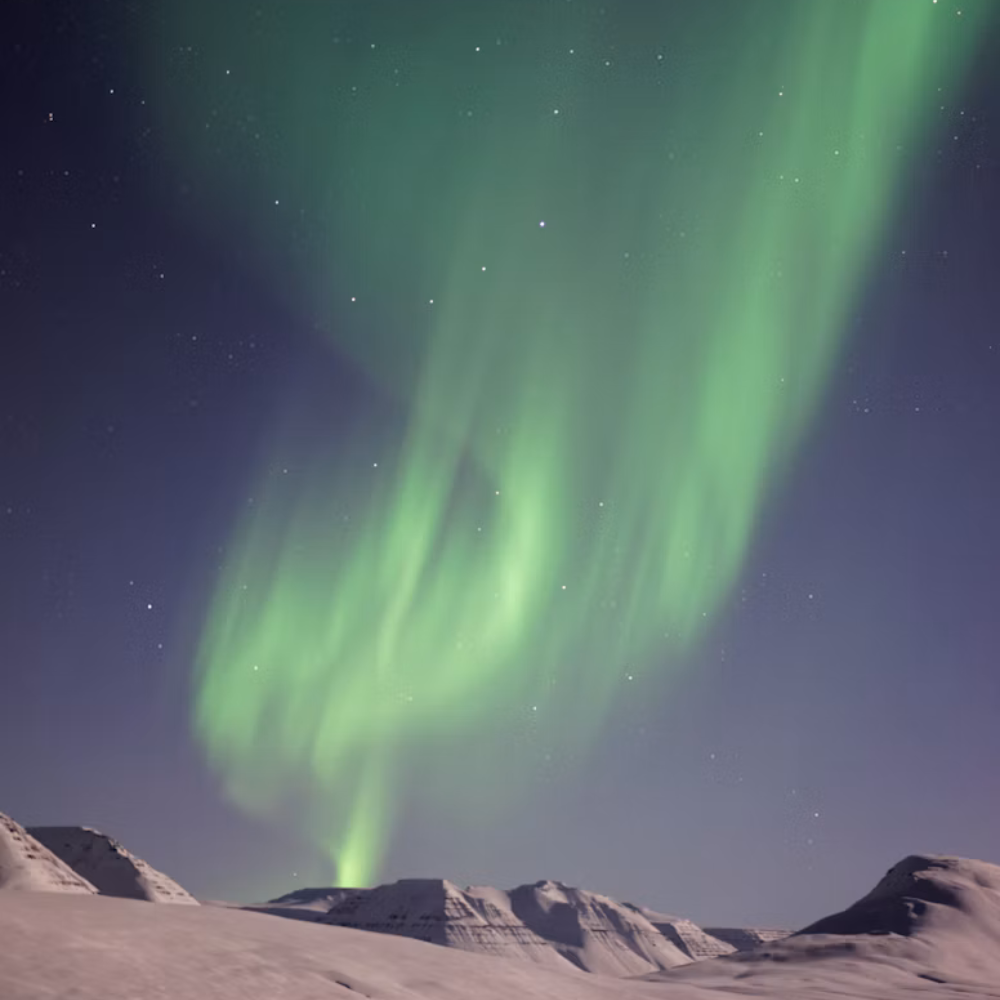
The aurora season in Iceland runs from late September to early April. Within that window, late September to October and February to March tend to work best, because the nights are dark enough and the weather is usually calmer. November to January have the longest nights but more cloud. On any given night you need three things at once: darkness, a clear sky and some solar activity. Nobody can promise you a sighting, but staying a few nights improves your odds more than anything else.
What to expect, month by month
There is no reliable percentage for each month. Your chances depend on darkness, cloud cover and solar activity together, and the weather is the part nobody can predict far in advance. The table below shows how each month usually goes.
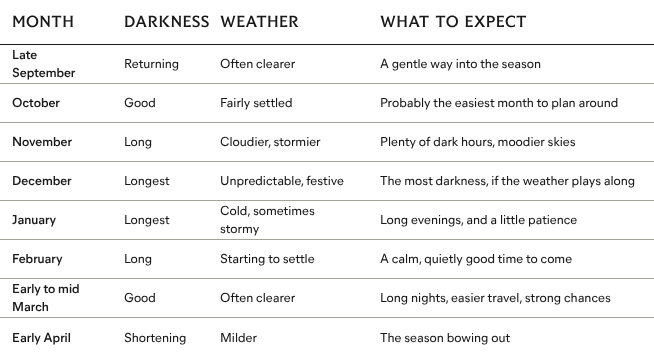
The main point is that the months at either end of the season have slightly shorter nights but more settled weather, and in our experience the weather decides most nights. Midwinter has the most darkness, but cloud rules out more evenings than people expect.
What has to line up
- Darkness. Long nights help, but you also need to be away from bright artificial light, which washes the aurora out in much the same way daylight does.
- A clear sky. The aurora happens far above the clouds, so if it is overcast where you are standing, you will not see it. This is what catches most visitors out.
- Solar activity. This is measured on the Kp index, which runs from 0 to 9. Around 3 is a good sign, and on a properly dark, clear night even 2 can give a good display. A high number under cloud still shows you nothing.
How to improve your chances
Stay several nights. You only need one clear night with some activity, and every extra night gives you another chance. With a single night, it comes down to luck.
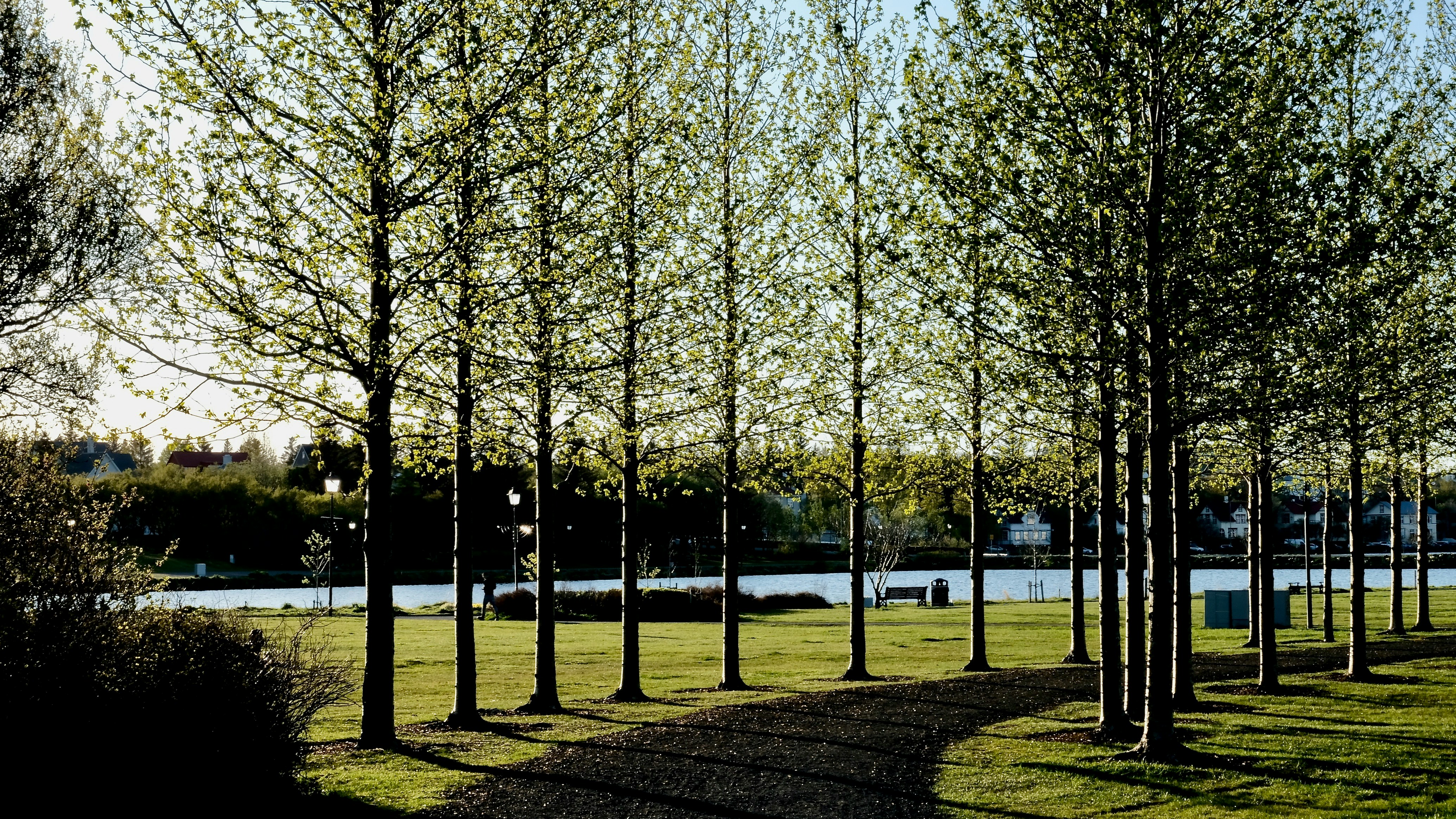
Leave the city lights behind. On a strong night you can see the aurora from Reykjavík, but street lighting makes it fainter. A short drive somewhere darker makes a big difference. Ask at reception. We follow the forecast and can suggest where to go.
Check the forecast. The Icelandic Met Office publishes a free aurora and cloud cover forecast at en.vedur.is. Look at it in the afternoon and head for wherever the sky is clearest.
Go out late. Activity usually peaks between 9pm and 2am, most often between 10.30pm and 1am. Dress warmly, bring a hot drink and expect to wait.
Keep your evenings open. Rather than booking one fixed aurora night, leave room in your plans. The people who see it are usually the ones who can go out as soon as the sky clears.
Where to watch near Reykjavík
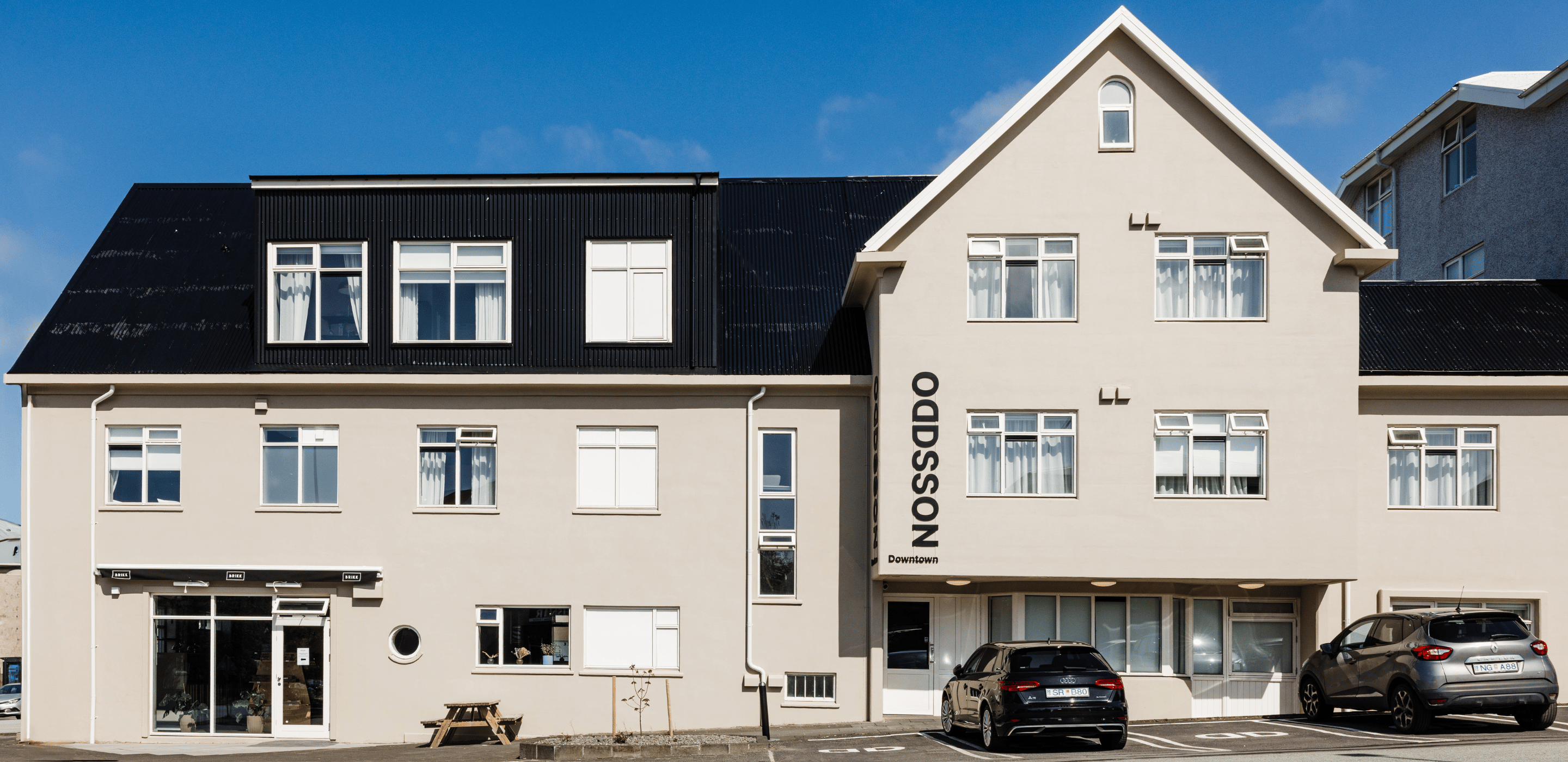
You don't need to go far. Within a short drive of the city there are dark bays, lighthouses and stretches of open coast with wide views of the sky. From any of our hotels you can get out to darker ground quickly when the forecast looks good, and be back in a warm bed when it doesn't.
A few questions we're often asked
Can you see the Northern Lights from Reykjavík?
Yes, on a strong, clear night. City light makes them fainter, so a short trip out of town helps.
What is the best month to see the Northern Lights in Iceland?
Late September to October and February to March offer the best balance of dark nights and settled weather. November to January are darker but often cloudier.
How many nights should I stay?
At least three in winter if you can. You need darkness, clear skies and solar activity on the same night, so more nights give you better odds.
Can anyone guarantee the Northern Lights?
No, so treat any guarantee with caution. A sighting depends on darkness, clear skies and solar activity at the same time, and none of those can be booked in advance.
What time of night is best?
Usually between 9pm and 2am, most often between 10.30pm and 1am.