
Northern Lights in Iceland: when to come, and what to expect
The short of it
You've picked a good country for this. The season runs from late September to early April, and if you come then and give yourself a few nights, you've a real chance. Your best chances are in late September to October and February to March, when the nights are properly dark but the weather tends to be gentler. Midwinter, November to January, gives you the longest dark evenings, though the skies are moodier. Three things need to meet on the same night: darkness, a clear sky, and a little solar activity. Nobody can promise you the lights, but you can give yourself time, and time is what makes the difference.
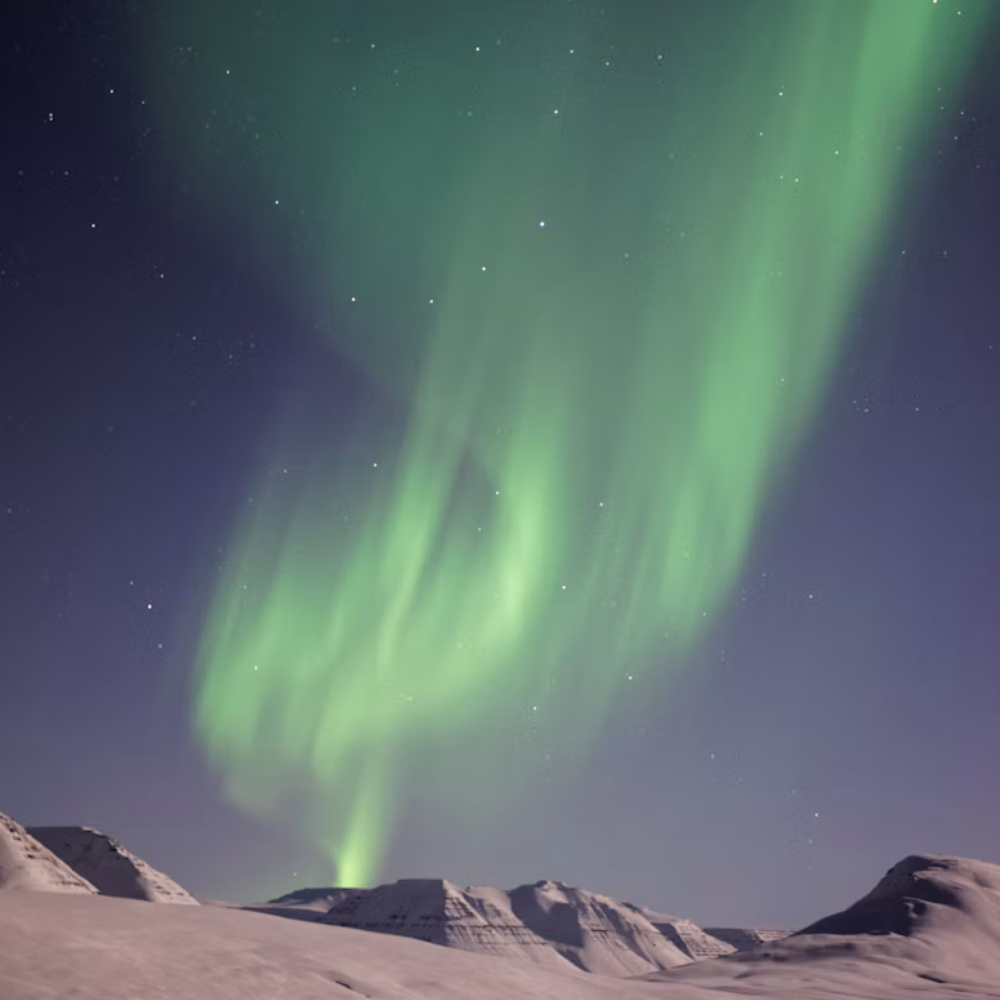
Give yourself the best chance
A little planning goes further than luck here. Pick your nights, get clear of the city lights, and stay out long enough to actually see something.
What to expect, month by month
There's no neat percentage for this, because your chances are really darkness, clear skies and solar activity all multiplied together, and the weather is the part none of us can order in. Here's how each month tends to feel.
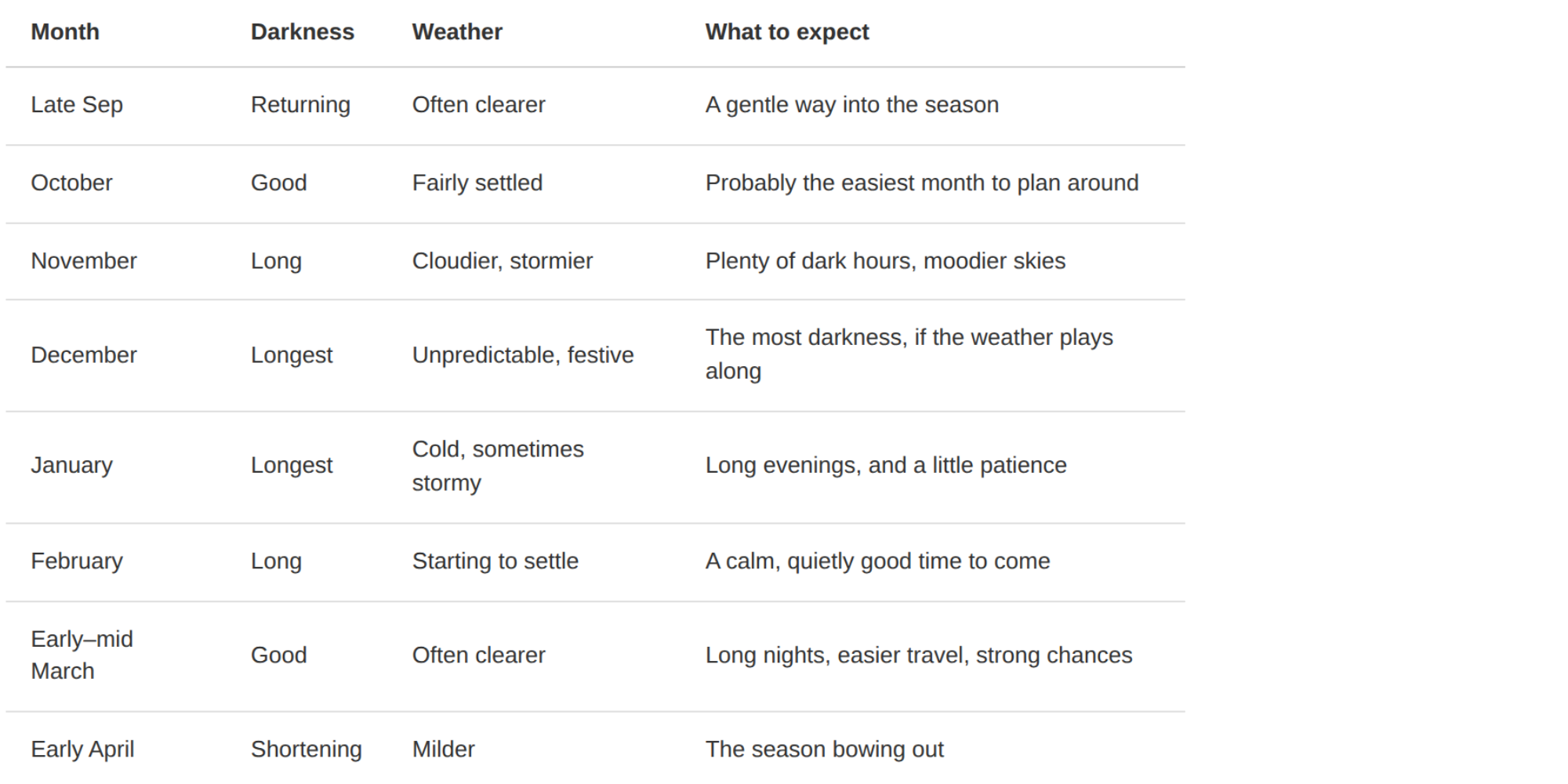
If you take one thing from the table, take this: the ends of the season, late September to October and February to March, give up a little darkness in exchange for kinder weather, and kinder weather is usually what wins the night. Midwinter looks unbeatable for darkness alone, but clouds cancel more evenings than people expect.
What has to line up
Three things, and they need the same night:
Darkness. The long nights are half of it. The other half is getting away from bright light, which washes the aurora out just as daylight does.
A clear sky. The lights sit high above the clouds, so if it's grey overhead where you're standing, you'll miss them. This is the one that catches most people out.
A little solar activity. It's measured by the KP index, a scale of 0 to 9. Around KP 3 is promising, and on a truly dark, clear night even KP 2 can be lovely. A big number under cloud still shows you nothing, which is why we keep coming back to the weather.
Are 2026 and 2027 good years?
They are, truthfully. The sun runs on an eleven-year rhythm, and this cycle peaked around 2025. Activity stays high through 2026 and begins to ease from 2027. So the next couple of winters are among the brightest this cycle will give, with the odds softening gently after that. You'll see some places call it a "last chance." It isn't, quite. It's a good stretch of years, and the lights will keep returning long after. But if you were waiting for a reason to come, this is a fine time.
How to give yourself the best chance
Stay a few nights. One clear, lively night is all it takes, and the longer you're here, the likelier you are to catch one. A single overnight is mostly down to luck, and we'd rather you didn't leave it to that.
Get away from the city lights. On a strong night you'll see the aurora from Reykjavík, but light softens it. A short hop to a darker spot changes everything. Ask at the front desk; we watch the forecast and know where to send you.
Keep an eye on the forecast. The Icelandic Met Office publishes a free aurora and cloud map at en.vedur.is. Have a look each afternoon and follow the clear patches.
Go out late. The lights are usually at their best between 9pm and 2am, most often from half past ten to one. A warm layer, a flask if you like, and a little patience.
Stay flexible. Rather than pinning your hopes on one fixed aurora night, keep your evenings open. The people who see it are nearly always the ones who could head out the moment the sky cleared.
Where to watch near Reykjavík
You don't have to go far. Within a short drive there are dark bays, quiet lighthouses and open coast where the whole sky opens up. From a Flóra hotel you're close enough to reach the dark quickly when the forecast turns, and close enough to a warm bed when it doesn't.
A few questions we're often asked
Can you see the Northern Lights from Reykjavík? On a strong, clear night, yes. City light softens them, so a short trip out of town makes a real difference.
What's the best month to see the Northern Lights in Iceland? Late September to October and February to March give the best balance of dark nights and kinder weather. November to January have the most darkness, with moodier skies.
How many nights should I stay? Give yourself at least three in winter. The lights need darkness, clear skies and solar activity on the same night, so more nights mean better odds.
Can you guarantee the Northern Lights? No, and be gentle with anyone who says they can. They depend on darkness, a clear sky and a little solar activity all at once, and none of that can be booked. Time and a little flexibility are your best friends here.
What time of night is best? Usually between 9pm and 2am, most often from half past ten to one.